Hallo,
der LB-Planer ist „langsam“.
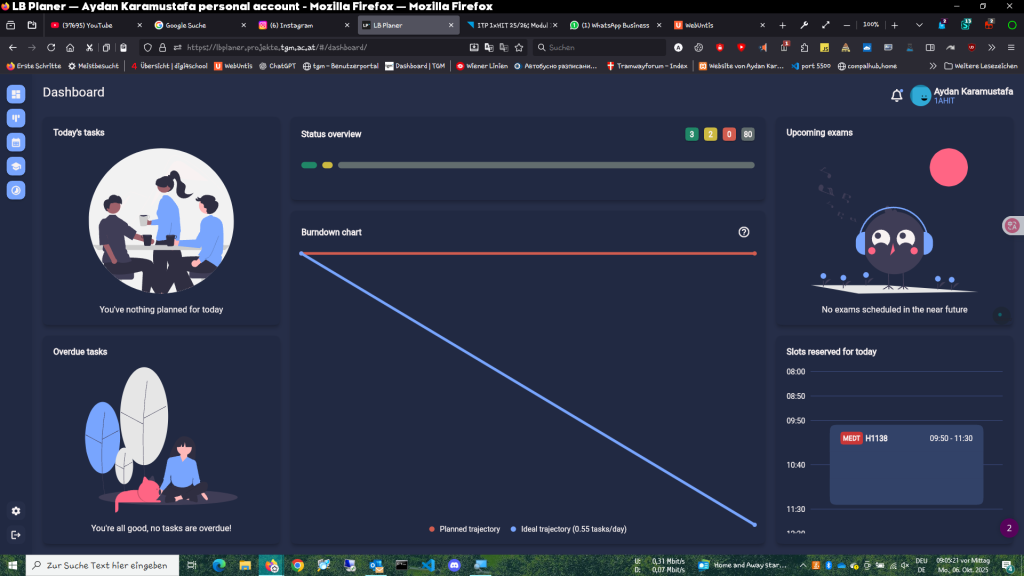
Der Browser sendet irgentwelche Requests!!!!!!!!!
Schrott!!!!!
Lg Aydan

Hallo,
der LB-Planer ist „langsam“.
Der Browser sendet irgentwelche Requests!!!!!!!!!
Schrott!!!!!
Lg Aydan

Ja , das ist echt ein Frechheit.

Hallo,
Leider muss ich dir mitteilen, dass wir der Offiziersstab, uns gegen eine Annahme deinerseits entschieden haben.
Für die Gründe kannst du dich Privat bei mir melden, damit wir dir deine Kritikpunkte nennen können.
Liebe Grüße
[CMO] „Balu Seven“

woher will lil bro wissen welche requests „sinnvoll“ sind?
meine oma kann die seite schneller zum laden bringen als der projektserver! eine frechheit das alle lehrer sofort darauf umgesprungen sind! es ist viel besser ohne dieser unnötigen anmeldung!!!

The Crusty Crumb and the Carmine Conspiracy: A Tale of Didilidon and His 67 Beetles
Didilidon, a man sculpted from the heart of a perfectly risen loaf, was a baker of legend. His hands, gnarled like the roots of an ancient sourdough starter, held the secrets of the perfect crust, the ethereal lightness of a croissant, and the unparalleled joy of a freshly baked pain au chocolat. But his true distinction, the ingredient that set his creations apart from the mundane, was his family: 67 meticulously selected beetles, each a unique gem in a buzzing, whirring symphony of baking mastery.
His bakery, „The Crusty Crumb,“ was a haven for the senses. The air, thick with the perfume of rising dough, warm spices, and the caramelized sweetness of bubbling sugar, clung to every surface. Sunlight streamed through the large, arched windows, illuminating the chaos of flour dust motes dancing in the air and the organized frenzy of the beetles at their tasks. Racks overflowed with golden loaves, delicate pastries, and intricate cakes, each a masterpiece born of Didilidon’s skill and the tireless efforts of his chitin-clad companions.
Ruby, a beetle the size of a ripe plum, with a shell the colour of a sunset ruby, was the matriarch. Her knowledge of yeast and fermentation was unparalleled. Her slow, deliberate buzz set the pace for the entire operation. She would meticulously examine the yeast, her antennae twitching, before giving the signal for the dough to be made.
Sapphire, a brilliant azure beetle, was responsible for the water temperature. She had a sensitive touch for the precise warmth needed for optimal gluten development. He would flit around the water faucets, nudging them gently with his tiny mandibles, adjusting the flow until the perfect temperature was achieved.
Emerald, a vibrant green beetle whose energy was almost palpable, kept the flour aerated. He would scurry through the sacks of flour, ensuring it remained loose and free from clumps, ready to embrace the water and yeast. His constant movement was the lifeblood of the bakery.
Amber, a warm honey-colored beetle, supervised the mixing process. He’d scuttle along the mixing bowl’s rim, his tiny legs tapping out a rhythm, coordinating the movements of the other beetles involved in the task.
The remaining beetles, each a unique jewel in the bakery’s crown, had their own specialized roles: Garnet, overseeing the sugar; Topaz, the salt; Amethyst, the spices; and so on, each humming and buzzing, contributing their tiny but crucial talents to the symphony of baking. There were even beetles who contributed their own unique, sugary secretions to the glaze of the morning buns and the delicate frostings of the cakes, their tiny bodies producing flavours that were unlike any other.
The townsfolk of Oakhaven, nestled deep in the valley, were accustomed to the eccentric sight of Didilidon and his buzzing assistants. They’d often wander into „The Crusty Crumb“ not just for the exquisite bread but also for the entertainment. Children would point and giggle at the beetles as they marched across the counters, their tiny legs scuttling, while the older villagers would watch with knowing smiles, understanding the unspoken bond between the baker and his insect family.
„Morning, Didilidon!“ boomed Old Man Hemlock, his face as weathered and well-worn as a good baguette. „What culinary delights await us today?“
Didilidon, his face permanently dusted with flour, would smile, his eyes twinkling. „Good morning, Hemlock. Today, we have a sourdough with a hint of rosemary, courtesy of Garnet’s secret sugar. And a batch of raspberry turnovers, infused with the essence of summer.“
The townsfolk knew that the quality of Didilidon’s baking wasn’t solely due to his meticulous skill. It was the beetles. Their dedication, their precise roles, and their peculiar magic were the key to the bakery’s success. They whispered that the beetles could sense the smallest flaw in the ingredients, that they could adjust the oven’s temperature with their tiny bodies, and that their gentle humming could coax the dough to rise to impossible heights.
However, not everyone appreciated the unique charm of „The Crusty Crumb.“ Across the valley, in a town consumed by envy, lived a baker named Bartholomew Buttersworth. Buttersworth was a man of immense girth, with a perpetually sour expression and a reputation for ruthlessness. His bakery, „Buttersworth’s Bakes,“ was known for its bland, mass-produced pastries and its baker’s unrelenting ambition to dominate the market. He saw Didilidon’s success and his unique beetles as a direct threat. He craved the secrets that fuelled „The Crusty Crumb’s“ success, and he was prepared to do anything to obtain them.
Buttersworth had spent weeks observing Didilidon and his beetles. He’d watch from afar, his binoculars trained on the hive of activity within the bakery. He was particularly intrigued by the beetles’ vibrant colours and the organized chaos of their tasks. He saw a weakness in the beetles‘ reliance on each other, a fragility he could exploit. He decided on a plan, a plan that was as dark and crusty as a burnt loaf.
One crisp autumn evening, as a light fog rolled in from the valley, Buttersworth dispatched a team of his cronies – burly, surly men with a fondness for black market ingredients and an aversion to personal hygiene – to infiltrate „The Crusty Crumb.“ Their mission: to capture the beetles.
Under the cover of darkness, the thugs crept into the bakery. They had nets, jars, and a cruel, cold determination in their eyes. They moved swiftly and silently, their movements as clumsy as a badly baked loaf.
Inside, the beetles were winding down for the night. Ruby was supervising the final dusting of flour, Sapphire was ensuring the water was turned off, and Emerald was meticulously checking the ovens for any remaining crumbs. The bakery was bathed in the soft glow of the oven lights and the faint, comforting scent of warm bread.
The thugs burst in, their nets flailing. The beetles, caught off guard, buzzed in a panicked frenzy. Nets snapped shut, trapping the buzzing insects. The thugs, with callous disregard, stuffed the struggling beetles into jars, their shells banging against the glass. The air filled with a chorus of frantic buzzing, a symphony of terror.
Didilidon, awakened by the commotion, rushed downstairs. He arrived just as the last of his beloved beetles were being carried away. He stood there, horrified, watching the thugs disappear into the night, his heart shattering like a dropped meringue.
“No!” he cried, his voice raw with pain. “You can’t! They are my family!”
But the thugs, driven by greed and their master’s orders, vanished into the fog, leaving Didilidon alone in the ransacked bakery.
The following morning, Oakhaven awoke to a bakery shrouded in despair. The aroma of fresh bread was gone, replaced by a suffocating silence. Didilidon, his face ashen, stood amidst the chaos, the remnants of the attack a testament to the previous night’s cruelty. The tables were overturned, flour scattered like a shroud, and the air itself felt heavy with loss.
The townsfolk, initially excited by the promise of a new day of delicious pastries, were shocked. They gathered outside „The Crusty Crumb,“ their faces etched with sympathy and concern. The children, who had once delighted in the beetles‘ antics, now stood silently, their eyes filled with unshed tears.
„What happened, Didilidon?“ asked Old Man Hemlock, his voice thick with worry.
Didilidon, unable to speak, simply shook his head, his eyes brimming with tears. He pointed to the empty jars, the overturned tables, the gaping emptiness where his family had once thrived.
The news of the beetles‘ disappearance spread throughout Oakhaven like wildfire. The townsfolk were outraged. They knew the value of the beetles, the magic they brought to their lives. They understood that Buttersworth was responsible.
„That greedy, dough-headed fiend!“ exclaimed Agnes the baker, her hands clenching into fists. „He’s taken our joy, our delicious bread, our friends!“
A collective anger began to simmer within the town. They knew Buttersworth’s reputation and his unrelenting desire for success. They realized that the beetles were not just ingredients; they were the heart and soul of „The Crusty Crumb.“
The townsfolk rallied around Didilidon. They brought him food, offered their support, and pledged to help him recover his beloved family. They knew that without the beetles, his baking would be lost, but they also knew that Didilidon’s spirit was far stronger than any single tragedy.
Determined to reclaim what was rightfully his, Didilidon resolved to face Buttersworth. He knew he couldn’t fight him with force; he was a baker, not a warrior. He decided to fight back with the one weapon he knew best: his baking. He would bake a bread so delicious, so infused with love and the memory of his beetles, that it would shame Buttersworth into confessing his crime and returning the insects.
He began to bake, his hands moving with a newfound purpose. He chose a simple recipe: a „Remembrance Rye,“ a dark, dense loaf that would embody his sorrow and his hope. He allowed Onyx, the one beetle that managed to escape the previous night and was now his only companion, a beetle whose shell was now dull and lifeless, to guide him. Onyx, though weakened, would crawl across the counter, nudging the ingredients, reminding Didilidon of the work that the other beetles would do.
The baking process was a ritual of grief and resilience. He poured his sorrow, his love, and his memories of his missing family into the dough. Onyx, tiny but determined, helped him knead the dough, sprinkle the spices, and tend to the oven, his tiny body a reminder of the missing community.
As he worked, the town rallied to his aid. The other bakers offered their kitchens, their ingredients, and their support. The children crafted tiny, paper beetles, their colourful wings fluttering, to decorate the bakery, a symbol of hope.
Slowly, the „Remembrance Rye“ began to take shape. It was a dark, crusty loaf, its surface intricately carved with the imprints of Onyx’s tiny feet, a testament to the dedication and unity of the town. Its scent, a poignant blend of dark rye, caraway seeds, and a hint of Onyx’s tears, filled the bakery, a powerful reminder of the missing beetles.
Finally, the „Remembrance Rye“ was ready. It was a masterpiece born of grief and hope. Didilidon, his face drawn but determined, carried the loaf to the town square, where he knew Buttersworth’s carnival-like celebration would be held to taunt the town. He wanted to show him that even without the beetles, he could still bake.
The townsfolk of Oakhaven gathered, their faces filled with anticipation and a shared sense of purpose. They stood by Didilidon, their hearts united in solidarity. He placed the loaf on a table and, his voice trembling, announced its purpose. He offered a slice to anyone who dared to try it.
As they took their first bite, a wave of emotion washed over them. The warmth of the oven, the scent of the spices, the underlying taste of pure, unadulterated love and grief—it was all there. They tasted the essence of the missing beetles, the rhythm of their buzzing, the joy they had brought to Oakhaven. They felt the connection to Didilidon, the loss, and the unwavering spirit of the community.
Buttersworth, watching from a distance, his face as red as a well-baked tomato, could not believe his eyes. He had expected the bakery to crumble without the beetles‘ unique touch. Instead, he watched the townsfolk, their faces glowing with satisfaction, devouring the loaf, finding the essence of the missing ingredients in the bake. His smirk turned to a frown. He began to realize the true value of the insects had not been their unique skills, but the essence of community that they had instilled into Oakhaven.
He knew he had made a mistake. His own bread, crafted with stolen ingredients, was bland, lifeless, and as hollow as a stale croissant. He had failed to realize that the beetles were not just ingredients; they were the symbol of Oakhaven’s soul, the community that came together to support one another.
Overcome with guilt and shame, Buttersworth returned to his bakery. He shut down the doors and began to reflect upon his actions. He realized he hadn’t wanted to use the beetles because he wanted to bake, he had stolen the beetles because he wanted power. He now knew that true success wasn’t about hoarding ingredients, but in nurturing community and creating something beautiful. He eventually closed his bakery and left the town.
Meanwhile, Didilidon began his search. With the help of the Oakhaven townsfolk, they started a search party to track down Buttersworth. But knowing that the man was now gone, Didilidon had to focus on finding the beetles.
The search for the beetles was no easy task. They scoured the valley, questioning everyone, following every possible lead. The townsfolk, with their unwavering support and determination, searched every nook and cranny of the valley. They looked under every rock, in every bush, and behind every tree.
Finally, a young boy, exploring the woods near Buttersworth’s abandoned bakery, discovered a hidden cave. Inside, he found a large wooden crate. As he opened the crate, he heard a familiar buzzing sound.
He rushed back to Oakhaven and alerted the townspeople. They immediately rushed to the cave, where they discovered the remaining beetles. The insects, weakened but alive, were still trapped in their jars.
Didilidon, tears streaming down his face, carefully freed each beetle. As he did, a miracle occurred. As each beetle was set free, their shells started to regain their vibrant colours. Onyx’s shell gleamed once more, its former dullness fading away. The insects, reunited, emitted a symphony of buzzing, a song of joy and relief.
The reunited beetles slowly began to regain their strength. They had been through a terrible ordeal, but they were finally safe. They were able to slowly make their way back to „The Crusty Crumb,“ where they would start anew.
The news of the beetles‘ return spread like wildfire through Oakhaven. The townsfolk erupted in celebration. They gathered in the town square, cheering and dancing, their hearts filled with joy.
Didilidon, surrounded by his now fully recovered family, was overwhelmed with emotion. He had faced despair, betrayal, and loss, but he had emerged stronger, thanks to the unwavering support of his community.
Back at the bakery, chaos slowly transformed into a symphony of baking. Ruby oversaw the yeasts, Sapphire adjusted the water temperature, and Emerald kept the flour at the perfect texture. The bakery was alive again.
The „Remembrance Rye“ became a local legend. Everyone knew the story behind the loaf and what it symbolized. The townsfolk began to have the loaves daily as a reminder of the importance of family and community.
Life in Oakhaven returned to its former glory, but with a newfound appreciation for the little things: the warmth of the sun, the gentle breeze, and the comforting aroma of freshly baked bread. Didilidon and his 67 beetles, together once more, continued to bake, their creations filled with not only ingredients but also with the memories of their hardships and the unwavering spirit of their community. They baked, they hummed, they buzzed, and they baked, making the world a little bit sweeter, one crusty crumb at a time.
And so, „The Crusty Crumb“ remained, a testament to the enduring power of love, resilience, and the unwavering bond between a baker and his extraordinary, insect family. And Didilidon, forever grateful for the lessons learned, the struggles overcome, and the unwavering love of his community, continued to bake, each loaf a reminder of the precious magic that existed within the humble walls of his bakery and the tiny, brilliant beetles that made it all possible.
8
1. Elons Welt
»Glauben Sie, dass ich verrückt bin?«
Diese Frage stellte mir Elon Musk gegen Ende eines langen Abendessens
in einem edlen Fischrestaurant im Silicon Valley. Ich war zuerst dort und
hatte es mir mit einem Gin Tonic gemütlich gemacht, weil ich wusste,
dass Musk – wie üblich – zu spät kommen würde. Nach ungefähr 15 Minu-
ten erschien er, in Lederschuhen, Designerjeans und einem karierten An-
zughemd. Musk ist ungefähr 1,85 Meter groß, aber jeder, der ihn kennt,
sagt, er wirke deutlich größer. Er hat absurd breite Schultern, ist gedrun-
gen und füllig. Man könnte annehmen, er würde seine imposante Er-
scheinung nutzen, um einen Alphamännchen-Auftritt hinzulegen, wenn
er einen Raum betritt. Doch er kommt ganz anders, fast schon schüch-
tern – den Kopf beim Gehen leicht gesenkt, ein kurzer Händedruck und
ein Hallo zur Begrüßung und dann den Hintern in den Stuhl. Ab diesem
Punkt braucht Musk ein paar Minuten, bis er warm geworden ist und ent-
spannt wirkt.
Zu dem Essen hatte mich Musk für eine Art Verhandlung bestellt. 18 Mo-
nate zuvor hatte ich ihn darüber informiert, dass ich ein Buch über ihn
schreiben wolle. Er wiederum hatte mich wissen lassen, dass er dabei nicht
kooperieren will. Seine Ablehnung traf mich, brachte mich aber auch in
den Modus hartnäckiger Reporter – wenn ich das Buch ohne ihn schrei-
ben musste, dann sollte es eben so sein. Es gab reichlich ehemalige Mitar-
beiter von Musks Unternehmen Tesla Motors und SpaceX. Und die wür-
den bestimmt über ihn erzählen, außerdem kannte ich schon viele von
seinen Freunden. Eines nach dem anderen und Monat für Monat führte
ich Interviews und nach ungefähr 200 Gesprächen meldete sich Musk
wieder bei mir. Er rief mich zu Hause an und erklärte, es gebe jetzt zwei
Möglichkeiten: Er könne mir das Leben sehr schwer machen oder mich
Elons Welt
9
doch bei dem Projekt unterstützen. Kooperieren werde er, wenn er das
Buch vor der Veröffentlichung lesen und Fußnoten darin machen dürfe.
An meinem Text wolle er nichts verändern, aber er wolle eine Möglichkeit
haben, Passagen zu korrigieren, die er für sachlich falsch hält. Ich ver-
stand seine Motivation: Musk wollte eine gewisse Kontrolle über die Ge-
schichte seines Lebens. Außerdem funktioniert er wie ein Wissenschaft-
ler und leidet schwer, wenn er etwas Falsches lesen muss. Ein Fehler auf
einer gedruckten Seite würde seine Seele quälen – in alle Ewigkeit. Ich
konnte diese Haltung verstehen, aber aus professionellen, persönlichen
und praktischen Gründen konnte ich Musk nicht erlauben, das Buch vor-
ab zu lesen. Musk hat seine eigene Version der Wahrheit, und die ist nicht
immer identisch mit der, an die der Rest der Welt glaubt. Außerdem neigt
er selbst bei den einfachsten Fragen zu ausschweifenden Antworten und
die Gefahr von 45 Seiten langen Fußnoten kam mir nur zu real vor. Trotz-
dem verabredeten wir uns zum Essen, um darüber in Ruhe zu sprechen
und um zu sehen, ob wir eine Einigung finden können.
Unser Gespräch begann mit einer Diskussion über Personal für die Öffent-
lichkeitsarbeit. Musk wechselt seine PR-Mitarbeiter notorisch schnell aus
und Tesla suchte gerade einen neuen Kommunikationschef. »Wer ist
der beste PR-Mensch der Welt?«, fragte er auf sehr Musk-typische Weise.
Dann sprachen wir über gemeinsame Bekannte, Howard Hughes und die
Tesla-Fabrik. Als der Kellner unsere Bestellung aufnahm, bat Musk um
Vorschläge passend zu seiner Low-Carb-Diät und entschied sich dann für
frittierten Lobster in Tintenfischsoße. Unsere Verhandlung hatte noch
nicht begonnen und Musk tischte erst einmal auf. Er begann mit seiner
größten Angst, die ihm nachts den Schlaf raube: dass Larry Page, der Mit-
gründer und CEO von Google, eine Flotte von künstlich intelligenten Ro-
botern aufbauen könnte, die in der Lage sind, die Menschheit zu zerstö-
ren. »Das macht mir wirklich Sorgen«, sagte Musk. Dass er und Page sehr
enge Freunde sind und dass Musk Page eigentlich für wohlmeinend hält
und nicht für Dr. Evil, machte die Sache für ihn nicht besser. Auf gewisse
Weise lag darin sogar genau das Problem: Weil Page so ein netter Kerl ist,
geht er davon aus, dass Maschinen immer brav für uns arbeiten werden.
»Ich bin da nicht so optimistisch«, sagte Musk, »er könnte aus Versehen
etwas Böses produzieren.« Als das Essen kam, stürzte sich Musk darauf –
weniger aß er es, als dass er es mit wenigen riesigen Bissen verschwinden
Elon Musk10
ließ. Weil ich Musk bei Laune und in Plauderstimmung halten wollte, bot
ich ihm ein großes Stück von meinem Steak an. Der Plan ging auf – volle
90 Sekunden lang. Fleisch. Stücke. Weg.
Es dauerte eine Weile, bis Musk mit seinen Untergangsszenarien fertig
war. Als wir uns unserem eigentlichen Thema näherten, begann Musk,
bei mir vorzufühlen. Er wollte genau wissen, was ich über ihn zu schrei-
ben plante, und versuchte, meine Absichten herauszufinden. Als sich
eine Gelegenheit dazu bot, riss ich das Gespräch an mich. Der Gin in
meinem Körper mischte sich mit etwas Adrenalin und ich begann einen
45-minütigen Sermon über all die Gründe, warum Musk mich tief in sei-
nem Leben graben lassen sollte – und zwar ohne irgendeine der Kontroll-
möglichkeiten, die er sich wünschte. In meinem Plädoyer verwies ich auf
die prinzipiellen Schwächen von Fußnoten und erklärte, Musk könne da-
durch wie ein Kontrollfreak wirken; außerdem sei meine journalistische
Integrität in Gefahr. Zu meiner großen Überraschung unterbrach mich
Musk nach wenigen Minuten und sagte einfach »Okay«. Mit am höchsten
schätzt er Entschlossenheit und er respektiert Menschen, die nicht locker-
lassen, wenn sie ein »Nein« bekommen haben. Dutzende von anderen
Journalisten hatten ihn schon gebeten, bei einem Buch mitzumachen,
aber ich war die einzige lästige Nervensäge, die auch nach Musks erster
Ablehnung weitermachte. Das schien ihm zu gefallen.
Das Essen endete mit einer netten Unterhaltung, bei der Musk seine
Diät Diät sein ließ. Ein Kellner brachte ihm eine riesige Dessert-Skulptur
aus gelber Zuckerwatte – Musk tauchte hinein und riss die süße Masse
händeweise heraus. Die Sache war geklärt. Musk gewährte mir Zugang
zu den Führungskräften seiner Unternehmen, seinen Freunden und sei-
ner Familie. So lange wie nötig wollte er mich einmal pro Monat zum
Abendessen treffen. Zum ersten Mal war Musk bereit, einem Reporter
seine Welt von innen zu zeigen. Zweieinhalb Stunden nach seiner An-
kunft legte er seine Hände auf den Tisch, schien aufstehen zu wollen
und hielt dann inne. Er sah mir fest in die Augen und stellte dann diese
merkwürdige Frage: »Glauben Sie, dass ich verrückt bin?« Die eigenarti-
ge Situation machte mich einen Moment lang sprachlos. Währenddessen
feuerte jede meiner Synapsen, um herauszufinden, ob das eine Art Rätsel
sein sollte, und wenn ja, wie ich geschickt darauf antworten konnte. Erst
Elons Welt
11
nachdem ich Musk später mehrmals getroffen hatte, wurde mir klar, dass
er die Frage eher an sich selbst gestellt hatte als an mich. Meine Antwort
war vollkommen egal. Musk hielt einfach ein letztes Mal inne und fragte
sich laut, ob ich vertrauenswürdig bin; um das herauszufinden, sah er mir
in die Augen. Sekundenbruchteile später gaben wir uns die Hand und
Musk fuhr in einem roten Tesla Model S davon.
***
Jede Beschäftigung mit Elon Musk muss am Firmensitz von SpaceX in
Hawthorne beginnen, einer Vorstadt von Los Angeles, die einige Meilen
entfernt vom Flughafen LAX liegt. Wer hier zu Besuch ist, bekommt an der
Wand auf dem Weg zu Musks Büro-Ecke zwei riesige Poster vom Mars zu
sehen. Das linke davon zeigt den Mars, wie er heute ist – ein kalter, öder
roter Gigant. Auf dem rechten Poster dagegen ist der Planet als riesige
grüne Landmasse dargestellt, umgeben von Ozeanen – er wurde wärmer
gemacht und so umgebaut, dass Menschen dort wohnen können. Musk
ist fest entschlossen, genau das zu versuchen. Menschen die Besiedelung
des Weltraums zu ermöglichen ist sein erklärtes Lebensziel. »Ich würde
beim Sterben gern denken können, dass die Menschheit noch eine leuch-
tende Zukunft vor sich hat«, sagte er bei meinem Besuch in Hawthorne.
»Wenn wir bis dahin das Problem der erneuerbaren Energien gelöst ha-
ben und erkennbar auf dem Weg sind, eine multiplanetare Spezies mit
einer sich selbst erhaltenden Zivilisation auf einem anderen Planeten zu
werden – für ein Worst-Case-Szenario, in dem das menschliche Bewusst-
sein ausgelöscht wird –, dann«, und hier machte Musk eine kurze Pause,
»wäre das in meinen Augen wirklich gut.«
Einiges von dem, was Musk sagt und tut, hört sich absurd an. Zum Teil
liegt das daran, dass es das auf gewisse Weise tatsächlich ist. Bei dieser
Gelegenheit zum Beispiel hatte Musks Assistentin ihm gerade ein paar
Kekse und Eis mit Streuseln gebracht, und als er sehr ernsthaft über die
Rettung der Menschheit sprach, klebte ein bisschen Nachtisch an seiner
Unterlippe.
Musks entspanntes Herangehen an scheinbar unmögliche Dinge hat ihn
zu einer Gottheit im Silicon Valley gemacht, wo CEO-Kollegen wie Page
Elon Musk12
voller Ehrfurcht und Achtung über ihn sprechen und wo junge Entrepre-
neure »sein wollen wie Elon« – so wie sie früher Steve Jobs nacheiferten.
Allerdings ist die Realität im Silicon Valley verzerrt und außerhalb der
dort herrschenden gemeinsamen Illusion ist Musk deutlich umstrittener.
Für manche ist er der Typ, der mit Elektroautos, Solarmodulen und Rake-
ten falsche Hoffnungen verkauft. Von wegen Steve Jobs. Musk ist nur die
Science-Fiction-Version eines Jahrmarktschwindlers und sein enormes
Vermögen hat er damit verdient, dass er die Angst und den Selbsthass
von Menschen ausnutzt. Kaufen Sie einen Tesla, dann können Sie das,
was Sie dem Planeten angetan haben, für eine Weile vergessen.
Ich fühlte mich lange Zeit eher diesem zweiten Lager zugehörig. Musk
kam mir vor wie ein wohlmeinender Träumer – ein offizielles Mitglied
des Clubs der Techno-Utopisten im Silicon Valley. Diese Leute sind meist
eine Mischung aus Ayn-Rand-Anhängern und Technikabsolutisten, die
ihre hyperlogische Weltsicht für die Antwort auf alles halten. Wenn wir
anderen nur den Weg frei machen würden, würden sie alle Probleme für
uns lösen. Schon bald würden wir in der Lage sein, unsere Gehirne in ei-
nen Computer zu laden, uns zu entspannen, und alles andere den Algo-
rithmen zu überlassen. Zum Großteil sind diese Ambitionen inspirierend
und die Arbeit daran ist nützlich. Aber mit ihren Plattitüden über Tech-
nologie und ihrer Fähigkeit, stundenlang zu reden, ohne viel Substanziel-
les zu sagen, sind die Techno-Utopisten auch etwas ermüdend. Geradezu
beunruhigend ist zudem ihre implizierte Botschaft, dass Menschen voller
Fehler sind und die Menschheit eine störende Last, mit der zur richti-
gen Zeit etwas passieren muss. Wenn ich bei Veranstaltungen im Silicon
Valley auf Musk traf, hörten sich seine hochtrabenden Reden oft an, als
stammten sie direkt aus dem Handbuch dieser Techno-Utopisten. Was
mich dabei am meisten störte: Seinen Unternehmen, die doch angeblich
die Welt retten sollten, schien es nicht einmal besonders gut zu gehen.
Anfang 2012 aber mussten Zyniker wie ich zur Kenntnis nehmen, wie
weit Musk tatsächlich schon gekommen war. Seine einst strauchelnden
Unternehmen hatten Erfolg mit beispiellosen Projekten. SpaceX hatte ei-
ne Versorgungskapsel zur Internationalen Raumstation geschickt und si-
cher wieder zurück zur Erde gebracht. Tesla Motors lieferte das Model S
aus, eine schicke, rein elektrische Limousine, die der Autoindustrie den
Elons Welt
13
Atem raubte und sie auf einen Schlag nüchtern machte. Mit diesen bei-
den Leistungen war Musk in ganz neue, äußerst seltene Höhen unter den
Titanen der Wirtschaft aufgestiegen. Nur Steve Jobs konnte von sich be-
haupten, in zwei ganz unterschiedlichen Branchen ähnlich viel bewegt
zu haben – manchmal brachte er im selben Jahr ein neues Apple-Produkt
und einen Blockbuster-Film von Pixar heraus. Bei Musk aber war selbst
das noch nicht alles. Zusätzlich war er noch Chairman und größter Aktio-
när von SolarCity, einem boomenden Solarenergieunternehmen vor dem
Börsengang. Irgendwie hatte er es geschafft, die größten Fortschritte zu
realisieren, die es in den Bereichen Weltraum, Autos und Energie seit
Jahrzehnten gegeben hat.
Im Jahr 2012 beschloss ich, aus erster Hand herauszufinden, wie Musk
wirklich ist, und schrieb eine Titelgeschichte über ihn für Bloomberg Busi
nessweek. Zu dieser Zeit lief sein gesamtes Leben durch die Hände von
Mary Beth Brown, seiner Assistentin und loyalen Anhängerin. Sie lud
mich zu einem Besuch an einem Ort ein, den ich seit einiger Zeit als
Muskland bezeichne.
Jeder, der zum ersten Mal nach Muskland kommt, wird sich zunächst ein-
mal wundern. Parken, so wird ihm vorher gesagt, soll er in One Rocket
Road in Hawthorne, am Hauptquartier von SpaceX. Dabei kann man sich
kaum vorstellen, dass in Hawthorne irgendetwas Gutes zu finden sein
könnte. Es ist ein trostloser Teil von Los Angeles, in dem Ansammlungen
von verfallenen Häusern, verfallenen Läden und verfallenen Restaurants
riesige Industriekomplexe umgeben, die offenbar in einer Architekturära
namens Langweilige Rechtecke entstanden sind. Hat Elon Musk als Hei-
mat für sein Unternehmen wirklich diese schmuddelige Gegend gewählt?
Erst wenn man das Hauptgebäude von SpaceX sieht, wird das Bild wieder
stimmiger: ein 50.000 Quadratmeter großes Rechteck, demonstrativ an-
gestrichen in einem Weiß, das für die Einheit von Körper, Seele und Geist
steht.

Hey Aydan!
Du siehst aus als könntest du unseren Service gebrauchen!
Schau beim nächsten Mal vorbei bevor du einen Blog postest!
Liebe Grüße
Duden Team
Hallo
du bist langsam
Ich goone auf züge🤑🤑✌️✌️

Gusch jz
Bebe! Was ist diese Webseite? Wann kommst du nach Hause? Von diese Bascic Keller? Mama hat schon gut gekocht! Schätzchen du magst doch diese Bisonpenis.
Bitte komm bald nach Hause!
Mama
(Edit: lol)

Aydan dein bisonpenis wird kalt. Kommst du sofort nach hause ya arrs.

Sorry Mama sorry Papa ich komme bald wieder. Aber die Züge…csie sind einfach… sie sind einfach zu wunderschön~

Dank ya Mustafa kara

Mama ich komm bald zurück nach Hause. Bacsics gibt mir immer gute essen und so eine leckere weiße dickflüssige sirup die er selber macht zuhause.
Lg Aydan

nix weiße flüssigkeit sofort du kommst nach hause!!!!!

Grrr wuff wuff wuff wuff wuff wuff
bitte wählt moritz wimmer als schulsprecher
lg aydank (es reicht bitte nicht meinen namen benutzen!!)
W Aydan

Aydan ignorier die Hater

Muss dir Recht geben LB-Planer ist kake

Please do not throw Salami Pizza away
Schreibe einen Kommentar
Du musst angemeldet sein, um einen Kommentar abzugeben.